BASIC INFORMATION
Project: Rakova Jelša III Residential Neighborhood, Competition, 2nd Prize
Location: Rakova Jelša, Ljubljana
Client: City of Ljubljana’s Public Housing Fund
Year: 2025
Area: 9230 m2
Authors: BAAM Architects and Gašper Demšar, univ. dipl. inž. arh.
Typology: Urbanism, Residentaial Architecture
Photo/Viz: BAAM Architects



DESCRIPTION
Living in Rakova Jelša means finding a home in nature, in direct contact with the marshlands and green spaces that bridge the urban and natural environments. The Rakova Jelša III residential project, which includes 54 non-profit rental apartments, is designed to ensure a high quality of life in the heart of nature.
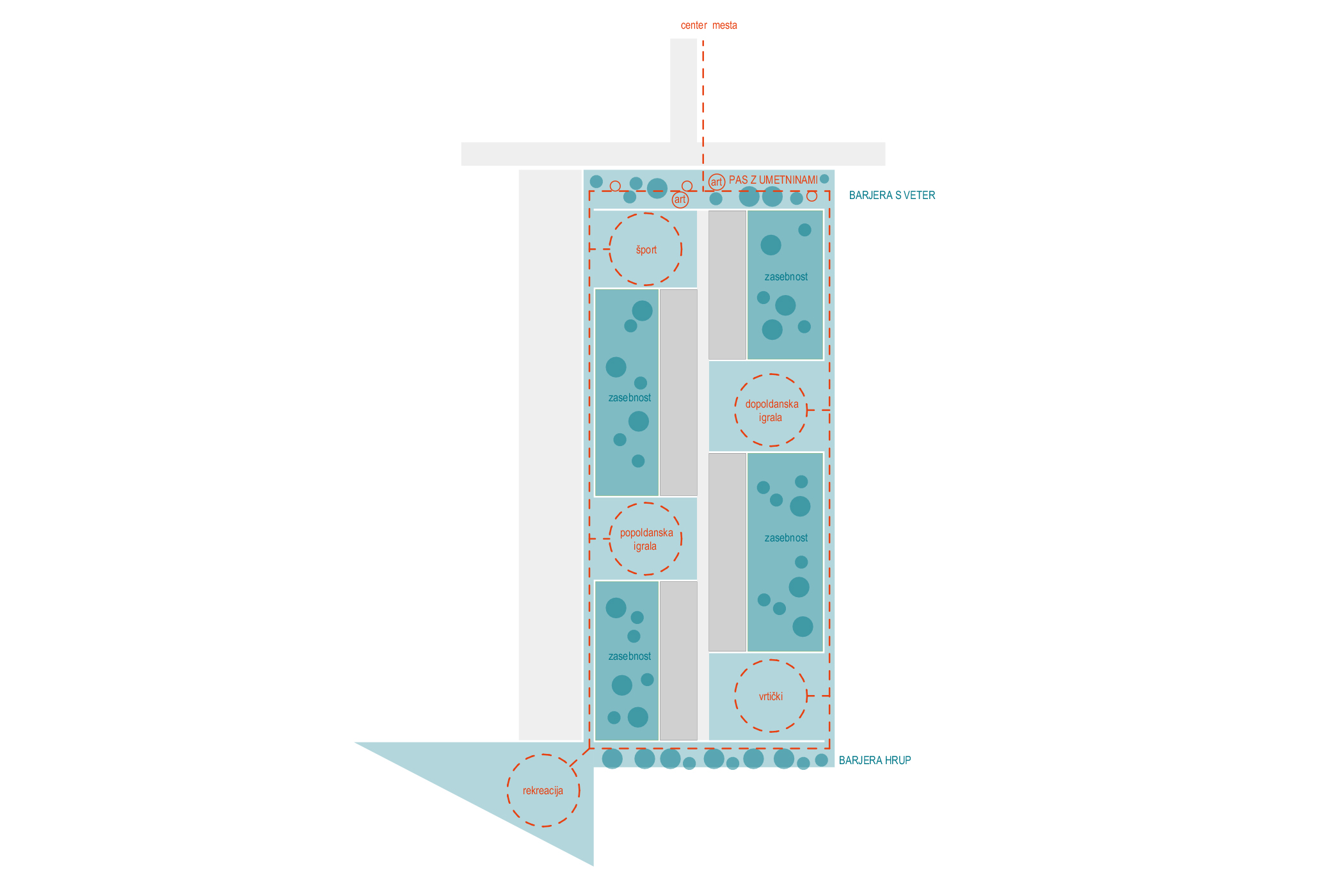
The design incorporates green spaces intended not only for the neighborhood's residents but also for the wider local community. In this way, the area naturally connects with the city center, creating an attractive and accessible environment for all generations
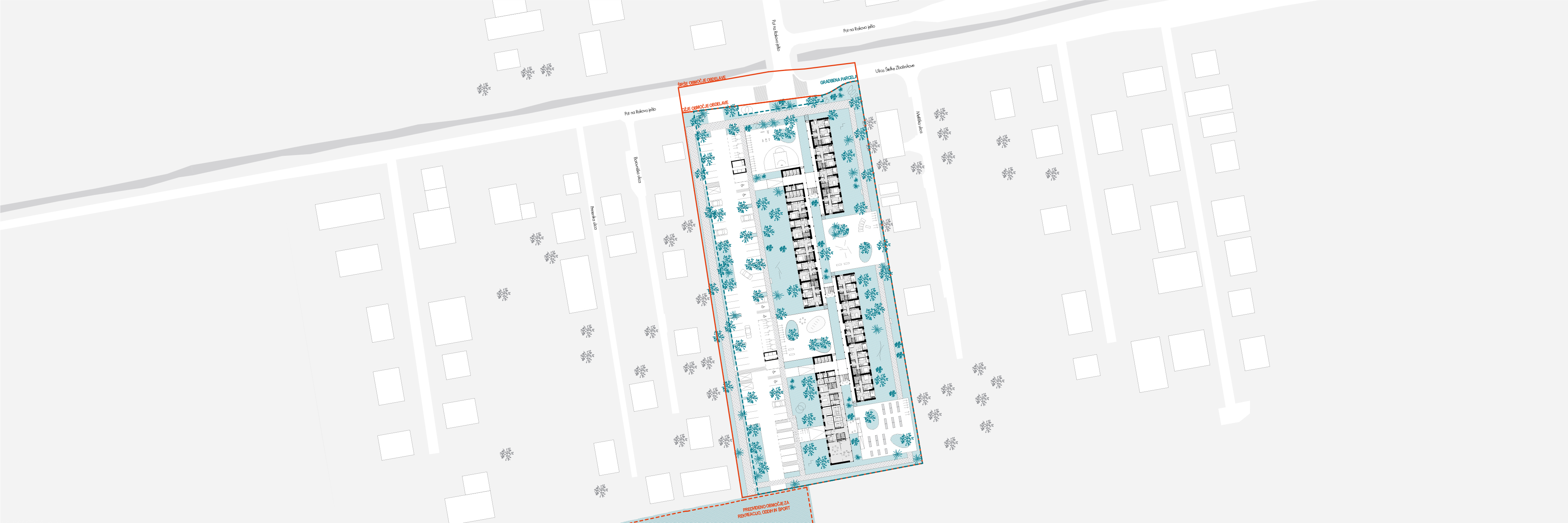
The urban design of the new residential neighborhood is based on respecting the morphology of the wider area. Following the pattern of existing single-family house clusters in the surrounding area, which are linked by shared access routes running at right angles to the main road, the new development arranges multi-apartment buildings in a cluster-based layout. This configuration enables the preservation of continuous green corridors between the buildings, which are essential for a high quality of life and a direct connection with nature.
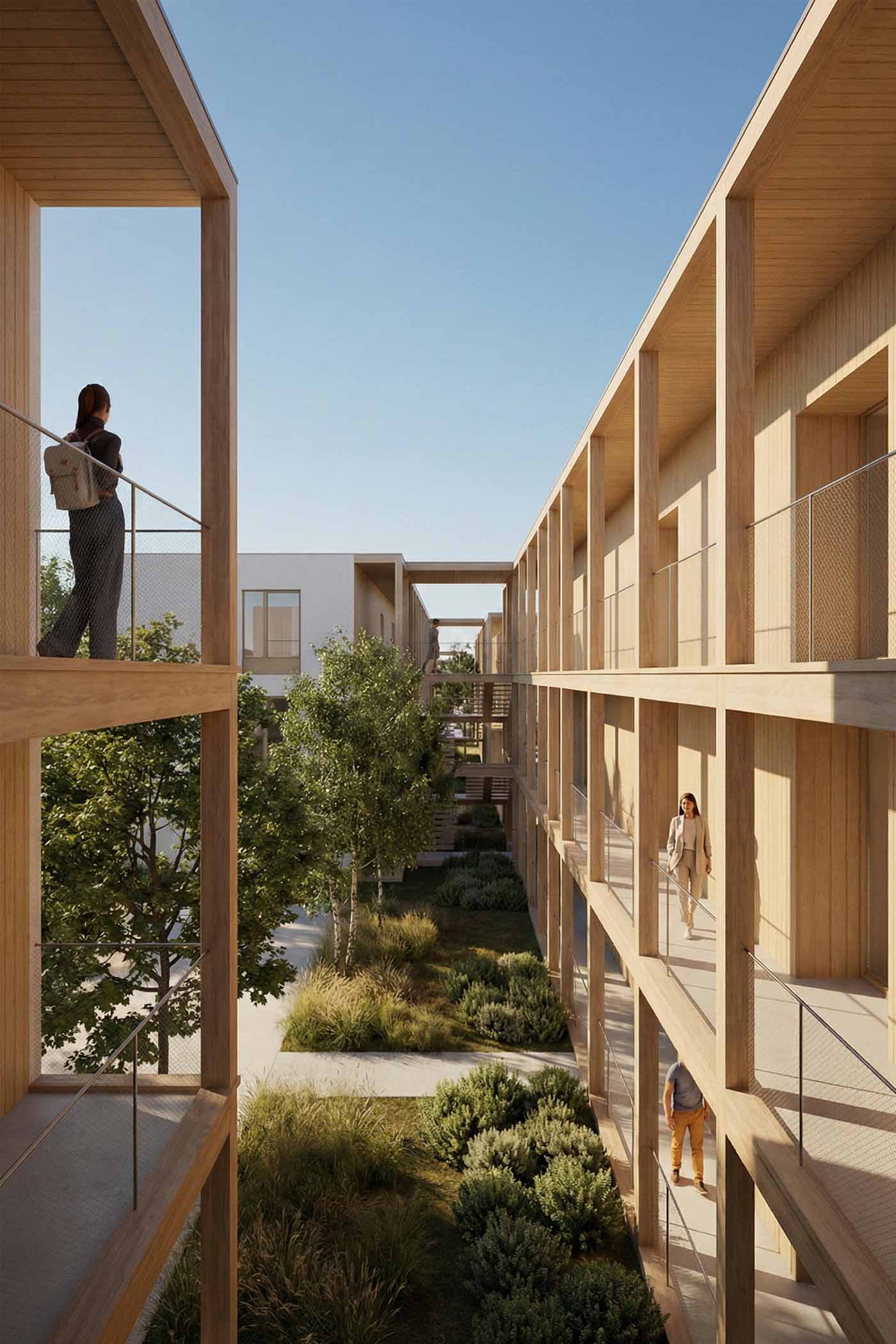
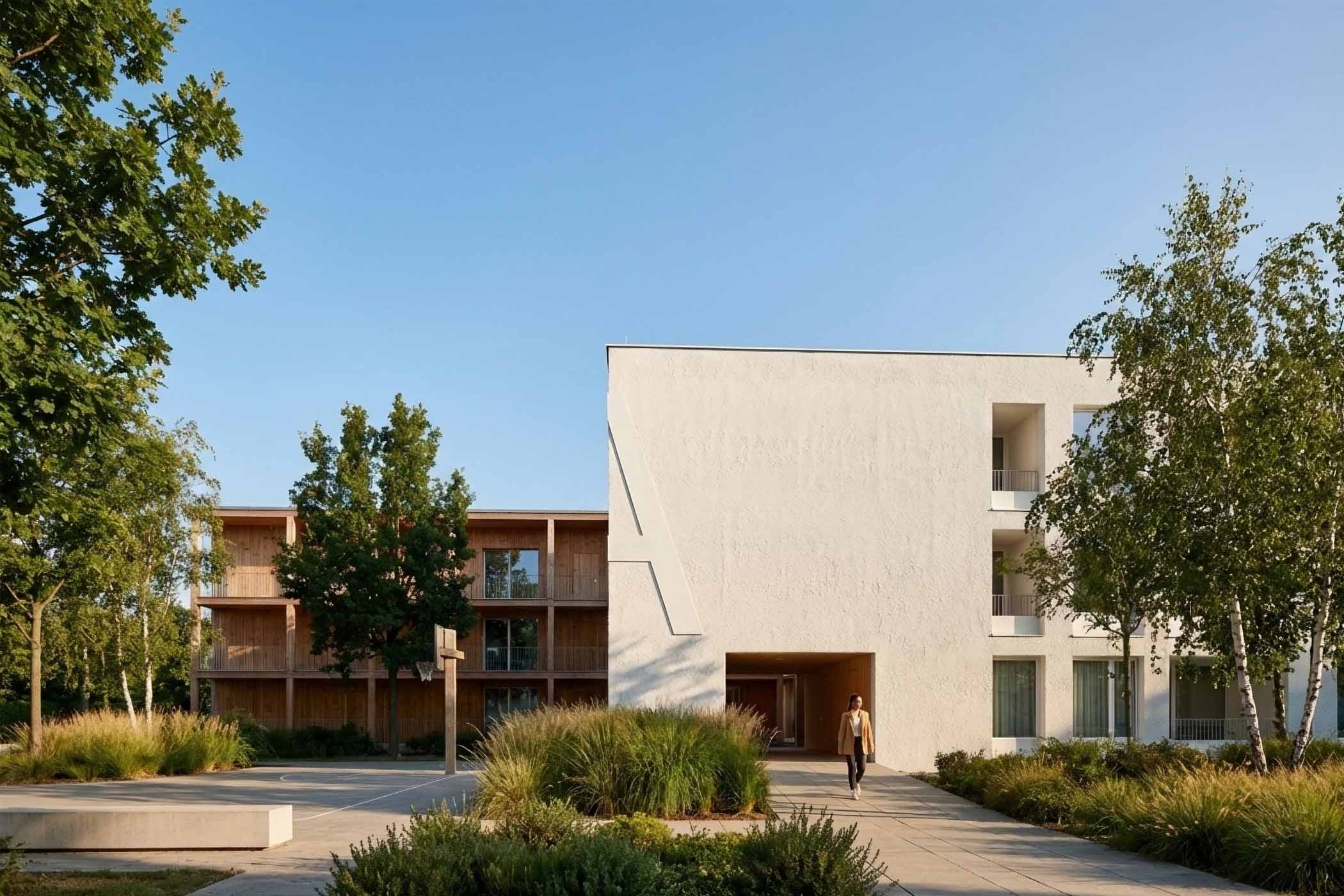
The building is defined by an interplay of two facades that highlight both its urban character and the privacy of the apartments. The first, the 'urban facade,' is composed of thick-layer textured plaster and reflects an urban identity through a rhythm of balconies and windows. At both entrance sections, the facade is monolithic, with larger openings subtly marking the access points to the buildings. The second, the 'private facade,' creates a contrast with its wood cladding, lightweight external galleries, and a rhythm of columns. It fosters a sense of homeliness and intimacy, using recessed sections to define the transition between private and public space
The residential buildings are oriented along an east-west axis, ensuring optimal natural light and ventilation, as well as two-way orientation for the apartments. This arrangement provides a sense of security and allows families to supervise children playing freely in the outdoor areas. The focus is on achieving a high quality of life through natural light from at least two directions and the adaptability of the apartments to accommodate diverse residents and life situations.
The design of the neighborhood also incorporates the Slovenian Paraplegic Association, providing specially adapted premises tailored to their specific needs. The entire development is designed to ensure barrier-free movement, functional spatial use, and an inclusive environment. This approach ensures the equal integration of persons with disabilities into the community while promoting a sustainable and inclusive urban future.
CONCEPT, PLANS